
Flow Regulator
– Pressure-Independent Mechanical Flow Control

A flow regulator — also known as a constant flow valve — is a mechanical device that maintains a constant, pre-set flow rate regardless of pressure variation. No electronics. No external power. No continuous adjustment. Bertfelt’s BT-Maric constant flow valves use a passive mechanical principle to hold a fixed flow rate in water and fluid systems — even when upstream pressure changes.

Bertfelt is the leading manufacturer of mechanical flow regulators — BT-Maric constant flow valves — for industrial and infrastructure applications.
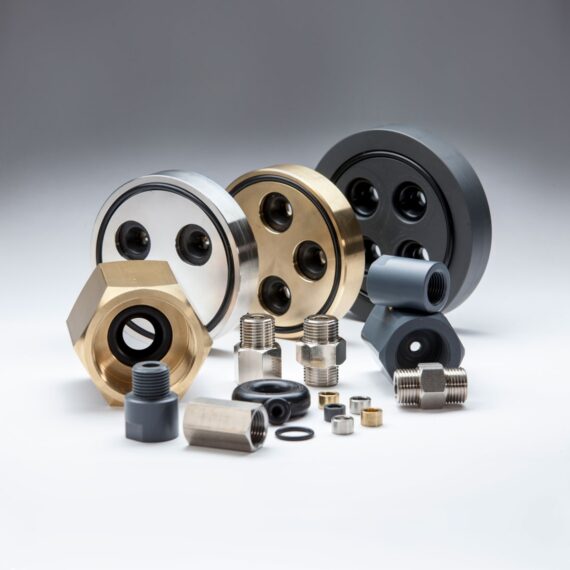

BT-Maric constant flow valves

Why flow control matters

Pressure in piped water systems is never constant. Pumps cycle. Demand shifts. Valves open and close elsewhere in the network. Every pressure change causes an immediate change in flow rate — and that flow variation propagates through the entire system.

The consequences are predictable and persistent. Branches closer to the pump receive more water than branches further away. Filters are exposed to flow rates they were not designed for. Cooling circuits deliver inconsistent thermal performance. Pumps drift away from their best efficiency point. Commissioning becomes a process of repeated manual adjustment — balancing one branch only to unbalance another.

Engineers describe the situation in familiar terms: flow drifts when conditions change. Parallel branches do not behave equally. The system performs at design — and then reality happens.

These are not edge cases. They are the normal operating conditions of any pressurised water system with multiple consumption points. The root cause is always the same: flow rate depends on pressure, and pressure is variable.

A mechanical flow regulator — specifically, a constant flow valve such as the BT-Maric — removes this dependency. It holds a pre-set flow rate regardless of pressure variation, turning an unpredictable system into a predictable one.

How a mechanical flow regulator works

The operating principle is entirely mechanical. Inside the BT-Maric constant flow valve, a flexible rubber O-ring sits within a precision-machined conical seat. The geometry of this arrangement is the mechanism.

Mechanical flow regulator at low pressure — O-ring opens to maintain constant flow rate

Low pressure

When pressure is low, the O-ring relaxes. The orifice opens wider, allowing flow through at the pre-set rate. The response is instant — no sensor, no actuator, no external power.

Mechanical flow regulator at high pressure — O-ring compresses to maintain constant flow rate

High pressure

When upstream pressure increases, the O-ring deforms into the conical seat. The orifice diameter decreases, compensating for the higher pressure. Flow remains constant at the pre-set value.

One moving part. No feedback loop. No maintenance. The valve geometry itself is the control system — holding flow constant across the specified operating range. This is passive, pressure-independent mechanical flow control. It works the same way on day one and after decades of operation.

The response is instantaneous and continuous. There is no delay, no calibration step, and no threshold that must be exceeded before the valve reacts. Every pressure change produces an immediate, proportional change in orifice geometry — maintaining the target flow rate in real time.

There is no sensor, no actuator, no feedback loop, and no power supply. The valve geometry itself is the control system. One moving part — the O-ring — responds directly to pressure. This eliminates the failure modes associated with electronic or pneumatic control: wiring faults, signal drift, power loss, software errors, and actuator wear. The flow regulator has no electronics to fail and no components that degrade under normal operating conditions.

The operating pressure range is defined at the time of manufacture. Within that range, the flow regulator holds the pre-set flow rate to a high degree of accuracy — typically within ±10% of nominal. Outside the specified range, the valve still functions but accuracy decreases progressively. Detailed performance curves are available for every valve size and flow rate, allowing engineers to verify suitability against their actual system conditions before specifying.

Because the mechanism is purely passive, it requires no commissioning adjustment, no periodic recalibration, and no scheduled maintenance. The O-ring material is selected for long-term chemical compatibility with water and common industrial fluids. In clean water applications with appropriate upstream filtration, BT-Maric flow regulators operate reliably for decades without intervention.

What a flow regulator solves

Pressure-dependent flow instability

In any system where pressure varies — and it always does — flow rate varies with it. A constant flow valve decouples flow from pressure. The result: stable, predictable flow regardless of what happens upstream or downstream. No manual intervention required.

Unequal flow distribution

In branched systems, the path of least resistance receives the most flow. Branches closer to the pump are over-supplied. Distant branches are starved. A flow regulator installed in each branch limits flow to its design value. Every branch receives its intended share — independent of its position in the network.

Excess flow and water waste

When system pressure rises above design conditions, unrestricted circuits allow more flow than necessary. The excess delivers no benefit — it wastes water, wastes energy, and accelerates equipment wear. A flow regulator caps flow at the specified maximum. The system uses only what it needs.

Thermal performance drift

Heating and cooling systems depend on consistent flow rates to deliver consistent thermal output. When flow varies, heat transfer varies. Temperatures become unpredictable. A flow regulator stabilises the flow through heat exchangers and terminal units, keeping thermal performance within design parameters.

Commissioning complexity

Manual balancing of large systems is time-consuming and fragile. Adjusting one branch affects every other branch. The process repeats until an acceptable compromise is reached — or until the next demand change undoes it. A flow regulator eliminates this interaction. Each branch maintains its own flow independently. Commissioning becomes a verification step, not a tuning exercise.

Mechanical flow regulation solution — BT-Maric flow regulator

BT-Maric flow regulators — constant flow valves — are used across water, industrial, and infrastructure systems where stable flow is critical to performance, efficiency, and equipment protection.

Data centre cooling

Cooling systems in data centres require constant water flow to maintain thermal stability across server cabinets. Pressure fluctuations in the cooling loop risk uneven cooling and equipment overheating. Flow regulators installed in each circuit hold the flow rate at its design value — protecting sensitive electronics and improving system reliability.

Read the case study

Filtration systems

During backwash cycles, filters require a controlled, consistent flow to clean effectively without damage. Without flow regulation, backwash flow is uncontrolled — risking filter damage and excessive water consumption. A flow regulator maintains the pre-set backwash rate regardless of pressure variation across the cleaning cycle.

Read the case study

Pump protection

Centrifugal pumps operating beyond their best efficiency point risk cavitation, shaft deflection, and premature wear. Variable pressure drags the pump off its operating curve. A flow regulator installed near the pump discharge holds flow within the optimal range — preventing off-curve operation, reducing energy consumption, and extending equipment lifespan.

Read the case study

Irrigation

In agricultural irrigation networks, water must be distributed fairly across all users regardless of distance from the source. Flow regulators at each connection point ensure every user receives their allocated share — preventing overuse, avoiding regulatory penalties, and maintaining equitable distribution across varying terrain and pressure zones.

Read the case study

Desalination

Chemical dosing in desalination plants depends on precise dilution water flow rates. Pressure fluctuations in large-diameter pipelines make this difficult without active control. A flow regulator maintains a stable, pre-set dilution flow — ensuring accurate chemical mixing, consistent process performance, and protection against overdosing.

Read the case study

Aircraft humidification

Cabin humidity systems on aircraft must deliver stable water flow despite continuous cabin pressure variation. Differentials shift continuously across each flight cycle. Flow regulators maintain a constant flow rate independent of pressure changes — ensuring consistent humidity control in an environment where stable performance is non-negotiable.

Read the case study

Three types of flow regulator

BT-Maric constant flow valves — also known as flow regulators — are available in three standard connection types, covering flow rates from 0.15 L/min to 8854 L/min.

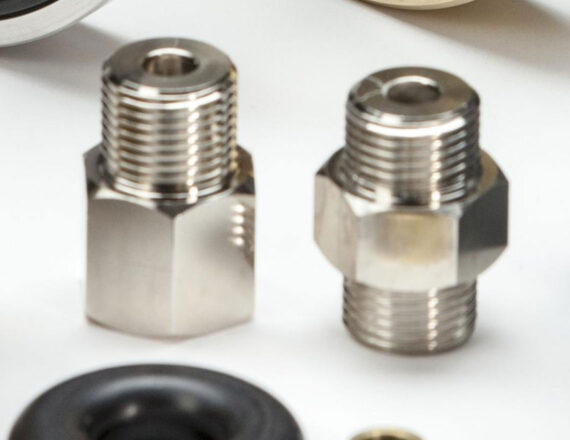
Threaded BT-Maric flow regulators — pressure-independent flow control valves

Threaded flow regulators

For pipes from 1/8″ to 2″. Flow rates from 0.15 L/min to 342 L/min. Easy to install in existing pipework.

Read more
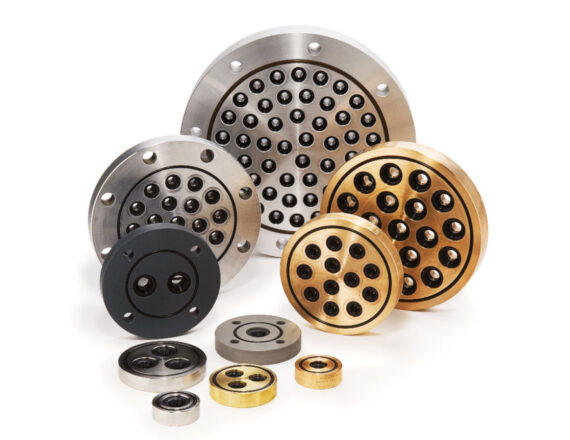
Wafer-type BT-Maric flow regulators for large-diameter pipes

Wafer flow regulators

Placed between flanges for DN20 to DN400. Flow rates up to 13,500 L/min. For larger pipe diameters and higher flow demands.

Read more
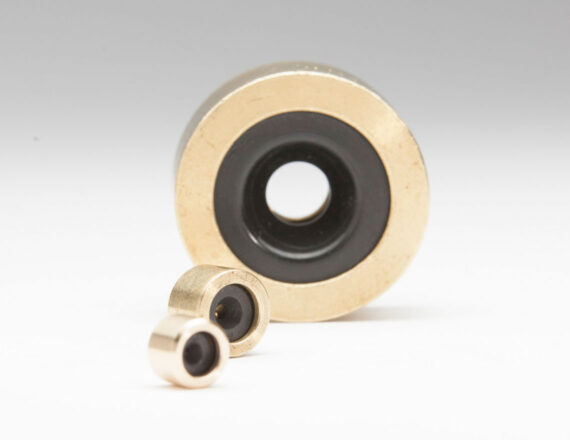
Insert-type BT-Maric flow regulators for in-line installation

Insert flow regulators

Designed to fit inside existing pipework or equipment. Flow rates up to 233 L/min. Compact and adaptable to OEM configurations.

Read more

Constant flow valve vs flow restrictor vs flow regulator

The terms constant flow valve, flow restrictor, and flow regulator are often used interchangeably — but they describe different mechanisms with different performance characteristics.

TermMechanismFlow behaviour under pressure change
Flow restrictorFixed orifice — reduces available cross-sectionFlow changes with pressure. Higher pressure = higher flow.
Flow regulatorBroad category — may be active (electronic) or passive (mechanical)Depends on type. Active regulators use sensors and actuators. Passive regulators use mechanical compensation.
Constant flow valveSelf-compensating mechanical element — orifice adjusts automatically to pressureFlow remains constant across the operating pressure range. No external input required.

The critical distinction: a flow restrictor creates a fixed resistance. Flow still varies with pressure. A constant flow valve compensates for pressure variation to maintain constant flow. This is the difference between limiting flow and controlling it.

In engineering specifications, the term “pressure-independent flow control” describes this behaviour precisely. The flow rate is independent of the pressure differential — within the specified operating range.

Certifications and compliance

BT-Maric flow regulators are manufactured under ISO 9001 and ISO 14001 certified quality and environmental management systems. Products hold ACS certification for potable water contact (French regulation) and comply with REACH and RoHS directives. All materials and production processes are documented and traceable.

View certificates

Frequently asked questions

A flow regulator — also called a constant flow valve — is a mechanical device that maintains a constant, pre-set flow rate regardless of pressure variations in the system. Unlike active control systems that rely on sensors, actuators, and electronic feedback loops, a passive mechanical flow regulator uses no electronics and no external power. The BT-Maric constant flow valve achieves this through a flexible O-ring in a precision conical seat — the geometry itself compensates for pressure changes to hold a fixed flow rate.

A flow restrictor reduces flow using a fixed orifice — but the flow rate still changes when pressure changes. Higher pressure means higher flow through the restrictor. A flow regulator — what Bertfelt supplies as the BT-Maric constant flow valve — actively compensates for pressure variation. The orifice adjusts mechanically to maintain the same flow rate across the operating pressure range. This is the key distinction: restriction limits flow, control stabilises it.

No. BT-Maric flow regulators are entirely passive mechanical devices. They require no electricity, no external power, no sensors, and no actuators. The only moving component is the rubber O-ring, which responds directly to pressure changes. Under normal operating conditions with clean water, the valves operate maintenance-free for decades.

Like any precision device in a water system, flow regulators perform best with clean water. A strainer upstream of the valve is recommended, particularly during commissioning when pipe debris is most common. The BT-Maric O-ring design is self-cleaning during normal operation — pressure pulsations cause the O-ring to flex, dislodging minor deposits. For systems with persistent particulate load, appropriate filtration upstream ensures reliable long-term performance.

BT-Maric flow regulators maintain constant flow within a specified differential pressure range. The exact range depends on the valve type, size, and flow rate. Typical operating ranges start from 0.5 bar differential pressure. Outside the specified range, the valve still functions but flow accuracy may decrease. Detailed performance curves are available in the product documentation for each valve type.

BT-Maric flow regulators cover a wide range: from 0.15 L/min (threaded type) up to 13,500 L/min (wafer type). The three connection types — threaded, wafer, and insert — cover pipe sizes from 1/8″ to DN400. Custom flow rates and configurations are available for OEM applications.

BT-Maric constant flow valves are pre-set at the factory to a specified flow rate. They are not adjustable after installation. This is a deliberate design choice — it eliminates the possibility of tampering, accidental misadjustment, or drift over time. The flow rate is determined by the valve specification at the time of ordering. For systems requiring different flow rates, the valve is replaced with one specified for the new rate.

More questions and answers