
 Nederlands
 Français
 Deutsch
 Svenska
 Español



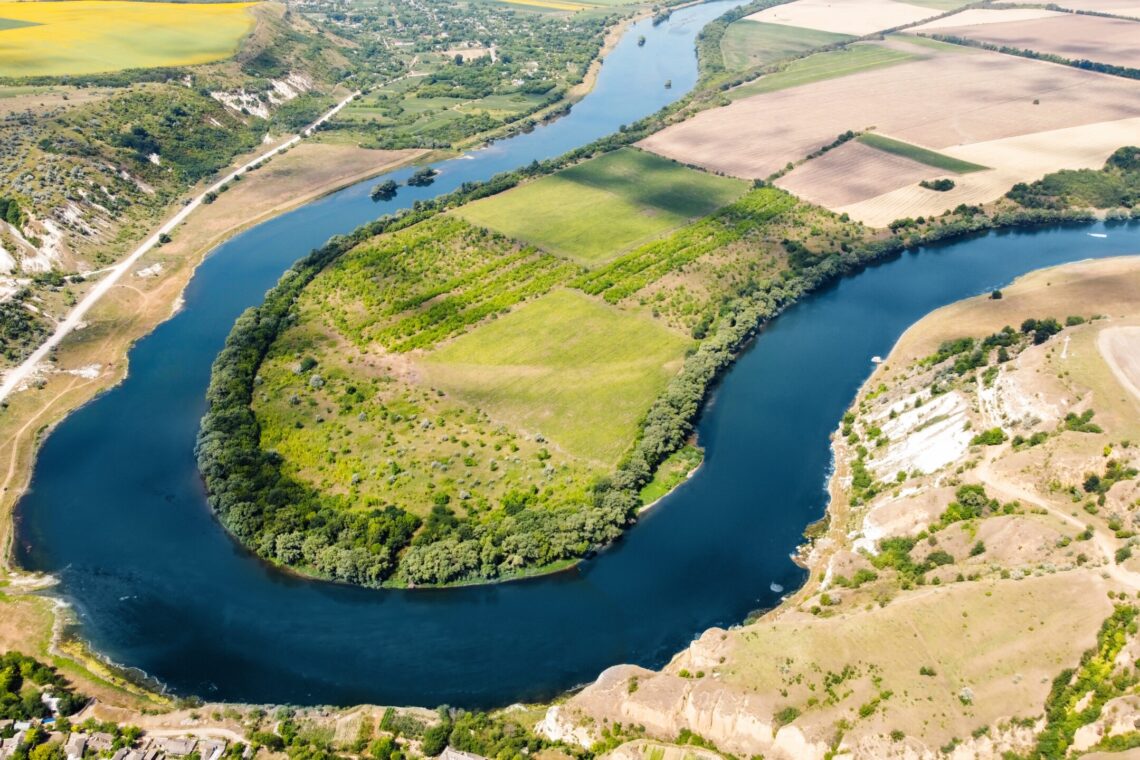
For most of human history, the largest freshwater reservoir on the planet kept its own books. Rain and snowmelt recharged the aquifers; springs, rivers, and wells discharged from them; and the cycle balanced over seasons and decades without anyone managing it. That self-balancing is now breaking down. A May 2026 assessment in Le Monde put it plainly: the natural dynamics of groundwater are largely disrupted on a global scale. Groundwater depletion is no longer a local problem of a few stressed basins — across most regions studied, the water you cannot see has stopped behaving naturally.
This is an article about that disruption, and about an unglamorous fact buried inside the hopeful part of the story: the largest single lever on groundwater is demand, and demand is where engineers actually work.
The reservoir that used to refill itself
A healthy aquifer behaves like a slow, deep battery. Precipitation infiltrates the soil and recharges it; over time it discharges to streams, wetlands, and wells. The U.S. Geological Survey describes groundwater depletion as the long-term decline in water levels that results when withdrawal sustainedly outpaces recharge — and notes that groundwater supplies drinking water for roughly half the population and the majority of irrigation in many regions.
The scale of the disruption is now well documented. A global study published in Nature analysed groundwater levels from roughly 170,000 monitoring wells across about 1,700 aquifer systems and found widespread, often accelerating decline through the twenty-first century. A companion synthesis in Science on the changing nature of groundwater in the global water cycle documents how recharge rates, flow regimes, and storage are all shifting under combined climate and human pressure — and confirms that the water removed by pumping does not vanish. A measurable fraction ends up in the ocean, making aquifer depletion a recognised contributor to global sea-level rise.
Any water engineer recognises the underlying pattern, because it is the same one that governs every distribution network: a finite supply, many consumers, and a balance that holds only as long as withdrawal stays inside the envelope the source can sustain.
What broke the rhythm
Three forces are pulling groundwater out of balance at once.
The first is over-extraction for irrigation and cities. Agriculture is the dominant draw — the UN World Water Development Report puts agriculture at roughly 70% of global freshwater withdrawals, and in water-stressed regions the share runs higher still. The second is climate change, which is shifting where and when recharge happens: longer droughts, altered rainfall, and melting glaciers and permafrost change the flow patterns that aquifers depend on. The third is land-use change — urban sprawl and paving that seal the recharge zones where water used to infiltrate.
None of these is a flow-control problem in isolation. But they share a common consequence: the demand side of the ledger keeps growing while the supply side shrinks. And on the demand side, a surprising amount of the withdrawal is not consumption at all. It is water moved, pumped, and circulated beyond what the process actually needs.
The demand side is where engineers live
Policy and managed recharge are the macro levers, and they matter. But they sit above the pay grade of the engineer specifying a pump, a branch line, or an irrigation header. What that engineer controls is narrower and more immediate: how much water each point of use is allowed to draw.
Here is the uncomfortable arithmetic. A distribution network — municipal, agricultural, or industrial — is a shared system. One source feeds a main; the main feeds branches; each branch serves a consumer. When supply pressure is high, every unregulated branch draws more than its design flow, because flow through a fixed restriction rises with pressure. The consumer that needed forty litres a minute pulls sixty. Nobody notices, because the water still arrives and the job still gets done. The excess is invisible — until you run a mass balance against the source.
That excess is pumped water. At the basin scale, it is aquifer water. It is the demand-side equivalent of the depletion the science describes, and it is entirely within an engineer’s reach to remove.
The Over-Circulation Penalty
We call this the Over-Circulation Penalty: the cumulative cost of every consumer drawing more flow than its process requires, simply because nothing on the line holds the flow to its design value. The penalty is rarely visible at any single point — sixty litres where forty would do is a small overshoot. Multiply it across hundreds of branches in an irrigation district or a municipal zone, and the overshoot becomes the dominant avoidable withdrawal on the system.
The penalty compounds in two directions. Upstream, the source is pumped harder than the design assumed, drawing down the aquifer faster. Downstream, the over-supplied consumer often gains nothing — an irrigation emitter past its design flow runs off, a process tank overfills to drain, a cooling branch over-circulates and collapses its own temperature differential. The water is extracted, paid for in pumping energy, and wasted at both ends.
The Drift Tax
There is a second, slower mechanism. Even a network commissioned correctly does not stay commissioned. Pumps are replaced, demand patterns change, zones are re-pressurised, restrictions silt up or wear open. Each change nudges the flow distribution off its design point. We call the accumulated cost of that slow wandering the Drift Tax — the price a system pays for the gap between the balanced state an engineer commissioned and the unbalanced state it has drifted into since.
The Drift Tax is why “we balanced this network when it was built” is not an answer to the over-extraction question. A network balanced in 2015 and never revisited is, by 2026, drawing on its source according to no one’s design. In a world where the source itself is in deficit, drift is no longer just an efficiency problem. It is a withdrawal nobody authorised.
What deliberate management looks like at the device
The hopeful note in the groundwater research is specific: depletion is, in places, reversible through deliberate management. The clearest proof is the North China Plain, one of the most severely depleted aquifers on Earth, where a Nature Communications study documented an unprecedented large-scale recovery — water levels rising about 0.7 metres per year since 2020 after surface-water diversion and stringent pumping limits cut abstraction by roughly twelve cubic kilometres a year. Deliberate management works. The question for an engineer is what deliberate management looks like at the scale of a single branch line.
It looks like a passive flow regulator installed in the line. The device holds the flow rate constant regardless of upstream pressure: a rubber element deforms against a conical seat in proportion to the pressure across it, opening or closing the flow path to maintain the pre-set rate. When supply pressure rises, the element closes slightly and the flow stays at design. When pressure falls, it opens. No electronics, no actuator, no commissioning step that can drift — the regulation is built into the geometry.
The effect on the demand side of the ledger is direct:
- Each consumer draws its design flow and no more, regardless of supply pressure or what neighbouring branches are doing.
- The Over-Circulation Penalty is removed at the point where it originates, not corrected downstream.
- Because the regulation is mechanical rather than commissioned, it does not drift — the Drift Tax is capped at installation.
- The source is pumped to demand, not to whatever pressure happens to be available.
A clear boundary belongs here, because it is the honest one. A flow regulator does not recharge an aquifer, divert a river, or change the weather. It does exactly one thing: it stops a system from withdrawing more than it needs. That is a demand-side intervention, and in a problem where demand is the dominant growing term, removing avoidable withdrawal is among the few levers an engineer holds directly.
The proof point
Bertfelt’s flow-control work sits squarely on this demand side. In irrigation and water-supply applications — vineyard branch lines, mobile treatment plants, distribution headers — BT-Maric flow regulators hold each branch to its specified flow regardless of the pressure available at the main. The standard application has always been described in terms of uniformity and protection: every emitter gets its design flow, sensitive downstream equipment is shielded from pressure swings. The groundwater data reframes the same mechanism in a larger ledger. Uniform branch flow is also minimum branch flow. A network that cannot over-draw is a network that cannot over-extract.
Frequently asked questions about demand-side flow control
How does a passive flow regulator actually reduce water withdrawal?
By holding each consumer to its design flow rate regardless of supply pressure. On an unregulated line, flow rises with pressure, so consumers routinely draw more than they need whenever supply pressure is high. A flow regulator caps the draw at the pre-set value. The water that would have been over-circulated is simply never withdrawn from the source.
Where in the network should the regulator install?
At the branch or consumer level, on the supply side of the point being controlled — for example, on each irrigation sub-main, each treatment-train feed, or each distribution branch. Branch-level Threaded variants suit individual lines; larger Wafer variants regulate main lines where a single device governs a whole zone. The objective is to place the regulator between the variable upstream pressure and the consumer whose flow you want fixed.
Does this require changing the pumps or the controls?
No. The regulator is passive and self-contained. It needs no power, no signal, and no control integration. It is specified for the design flow rate and installed in the line; the regulation happens mechanically as pressure varies. This is what makes it a retrofit-friendly intervention on existing networks rather than a capital re-design.
Won’t a pressure-reducing valve do the same thing?
No — they solve different problems. A pressure-reducing valve holds downstream pressure constant; flow through it still varies with demand and with the restriction downstream. A flow regulator holds flow constant regardless of the pressure differential across it. When the goal is to stop a consumer from drawing more than its design volume, flow is the variable to fix, not pressure.
What pressure range does the regulator work across?
The rubber element needs a minimum pressure differential — approximately 1.4 bar on the standard compound — to deform into its regulating position; below that it passes flow without regulating, so the mechanism is paused, not failed. The standard compound regulates up to 10 bar, and alternate compounds extend the range to 20 bar for high-pressure mains.
Is this relevant to a single site, or only at basin scale?
Both, and the link between them is additive. A single regulated branch removes one consumer’s over-draw. The basin-scale effect is the sum of those removals across every network drawing on the same source. The European Environment Agency’s freshwater and drought assessments make the point at scale: with much of Europe under recurring water stress, avoidable demand is the fraction of withdrawal that good engineering can actually retire.
Groundwater stopped keeping its own books, and no flow regulator will balance them alone. But the science is equally clear that the deficit is driven by demand, and that deliberate management reverses it. On the demand side, the most direct deliberate management an engineer can specify is the one that stops a system from withdrawing more than it needs. BT-Maric flow regulators — in Threaded form for branch lines, in Wafer form for mains — are that mechanism. The aquifer is the silent casualty in the global groundwater record. Holding every branch to its design flow is the quiet, unglamorous intervention on the side of the ledger we can actually reach.
Contact our experts!
Our team of experts is here to provide you with the knowledge and support you need. Whether you have questions about our products, need assistance choosing the right solutions, or want to discuss your unique requirements, our specialists are ready to help. With years of experience and a deep understanding of industry standards, we’re committed to offering you reliable guidance every step of the way. Don’t hesitate to get in touch – we look forward to assisting you!